What to Consider When Choosing Industrial Printers from China?

Time:2026-09-16 Author:Henry
0%

Choosing industrial printers from China can be a practical decision for manufacturers seeking reliable output and controlled investment. However, price alone rarely reflects the real operating cost. The right evaluation begins with what to consider when selecting industrial printing equipment, including application requirements, material compatibility, production speed, and service support.

A printer producing labels, metal panels, packaging, or ceramic components may need very different technology. Ink adhesion should be tested on the actual substrate. Ask for printed samples using the same ink, resolution, and curing conditions required on the factory floor. A clean sample is useful, but a week-long production trial reveals more. Watch for nozzle clogging, color drift, drying delays, and excessive cleaning cycles.

Supplier experience also matters. Review installation records, technician response times, spare-parts availability, and documented quality procedures. Request clear specifications rather than broad claims such as “high precision” or “industrial grade.” Confirm electrical standards, software compatibility, warranty coverage, operator training, and applicable safety requirements. Independent inspections can reduce uncertainty before shipment.

No checklist is perfect. Some assumptions fail.

A lower purchase price may hide costly downtime or difficult maintenance. A famous supplier may still provide weak local support. Careful buyers compare total ownership costs, not only quotations. They verify factory capabilities, communicate acceptance criteria in writing, and assess whether the equipment can expand with future demand. Reliable decisions come from evidence, practical testing, and honest discussion of limitations.
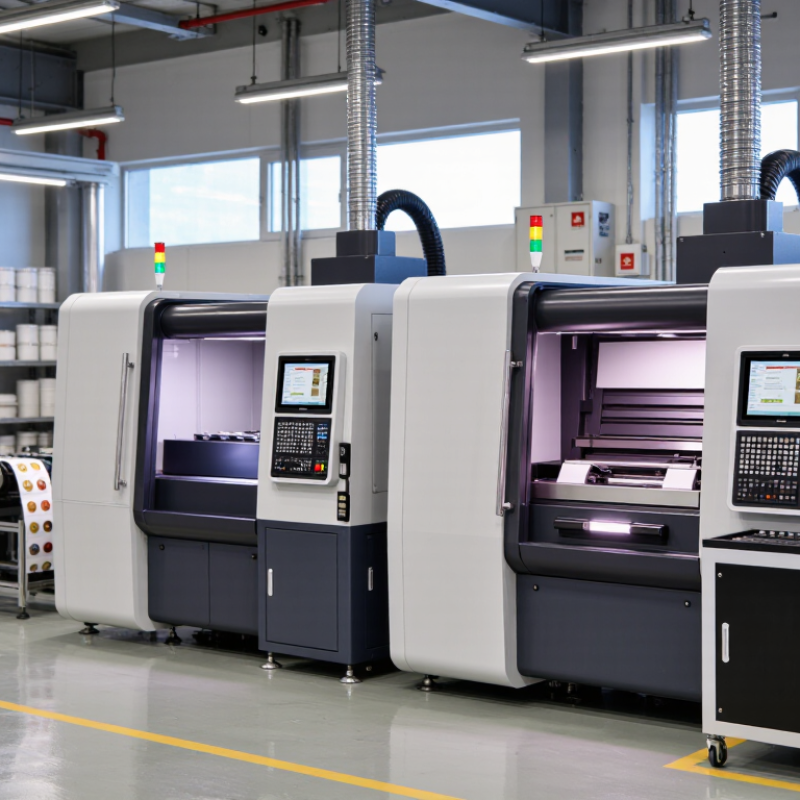
What to Consider When Choosing Industrial Printers from China?

Define Print Needs: 203–1,200 dpi, Substrate Type, and 24/7 Duty Cycle

When choosing an industrial printer from China, define the print task before comparing prices. A resolution range of 203–1,200 dpi covers very different production needs. Lower resolution may suit shipping labels and readable text. Higher resolution supports small fonts, dense barcodes, and detailed graphics. However, maximum dpi does not guarantee better output. Ink control, printhead alignment, and software settings also affect clarity.

Identify every substrate the printer must handle. Corrugated boxes, coated paper, plastic film, metal parts, and textured surfaces absorb ink differently. Surface tension matters. So does drying time. Ask for printed samples using your actual materials, not only supplier-provided paper. Check adhesion after rubbing, moisture exposure, and normal handling. A sample can still look excellent while hiding long-term problems.

For a 24/7 duty cycle, inspect the machine beyond its headline speed. Request rated operating hours, maintenance intervals, spare-part availability, and temperature limits. Confirm whether continuous printing requires frequent cleaning or manual adjustment. In a real production line, ten minutes of stoppage can disrupt several downstream processes. I would also test recovery after an interrupted job. Many evaluations overlook this. That is a mistake. Ask for service response times, operator training, and clear technical documentation before purchase. A lower initial cost may become expensive if support is slow or consumables are difficult to source.

Industrial Printer Selection: Resolution by Application

Representative industrial print requirements range from 203 dpi for basic coding and marking to 1,200 dpi for fine graphics and high-density variable data.

Print Resolution

203–300 dpi is commonly adequate for dates, lot codes, barcodes, and basic text. Choose 600–1,200 dpi when printing small characters, detailed logos, or dense variable data.

Substrate Type

Confirm compatibility with paper, coated film, plastic, glass, metal, corrugated board, or other porous and non-porous materials before selecting the printer and ink system.

24/7 Duty Cycle

Continuous production requires stable print quality, automatic cleaning or maintenance functions, suitable consumable capacity, and a duty-cycle rating aligned with the actual line speed.

Verify Chinese Factory Quality with ISO 9001 and IEC 60529 IP Ratings

What to Consider When Choosing Industrial Printers from China?

A reliable industrial printer begins with a verifiable factory, not an attractive product page. ISO 9001 certification shows that the manufacturer follows documented quality procedures. However, a certificate alone is not enough. Check its validity, certification scope, issuing body, and covered production site. Ask for recent audit records when possible. During a factory visit, observe incoming material checks, assembly controls, calibration labels, and final inspection areas. Small details often reveal larger habits.

IEC 60529 IP ratings help assess protection against dust and water. An IP rating should match your working environment, such as a dusty workshop or washdown area. Request test reports for the exact printer model and configuration. Do not rely only on a general factory statement. Confirm whether testing used the same enclosure, connectors, and operating conditions. This step is easy to overlook.

Tips: Ask for a sample unit before placing a large order. Test print quality, heat control, software stability, and cleaning access. Compare serial numbers with inspection records. Speak with the quality manager, not only a sales representative. I have found that production samples can expose weaknesses hidden in polished demonstrations. That is uncomfortable, but useful. Also review spare-part control and complaint handling. ISO 9001 supports consistency, yet real performance still depends on people, maintenance, and honest communication.

Check CE, RoHS’s 10 Restricted Substances, and China CCC Requirements

When choosing an industrial printer from China, compliance should be checked before price and delivery time.

CE marking indicates conformity with applicable European Union requirements. It is not simply a quality badge.

Ask for the EU Declaration of Conformity, relevant test reports, and technical documentation. Confirm that the documents match the exact printer model and electrical configuration.

RoHS compliance requires control of ten restricted substances:

  • lead
  • mercury
  • cadmium
  • hexavalent chromium
  • PBB
  • PBDE
  • DEHP
  • BBP
  • DBP
  • DIBP

Request material declarations for circuit boards, cables, coatings, and plastic housings. A general statement may sound convincing, but it can hide supplier-level gaps.

Components may change after approval. That detail is easy to miss.

China CCC requirements also deserve careful checking.

CCC applies only to products listed within China’s compulsory certification scope. The printer, power supply, or related equipment may need separate verification.

Ask the supplier to confirm the current product category and provide valid certificates when applicable. Do not rely on an old scanned document.

Tips

Match the certificate number, model, voltage, and factory information.

Check whether reports come from an accredited laboratory.

Keep samples and records from the delivered batch.

A factory audit is useful, but it cannot replace document review.

Even careful buyers sometimes overlook replacement parts.

Recheck them before shipment.

Compare Five-Year TCO Using Ink Yield, Energy, Service, and Downtime

When choosing industrial printers from China, purchase price is only the opening figure. A five-year total cost of ownership (TCO) model gives a more honest comparison. Record print volume, ink price, usable ink yield, power draw, maintenance intervals, and local labor rates. Ask for test data on your actual substrate, not a glossy sample. Small yield differences become large expenses in 24-hour production.

Ink yield should be measured per finished square meter, including cleaning cycles, startup waste, and rejected prints. Request logged results from a controlled trial. Energy costs deserve equal attention. Measure standby and operating consumption, then multiply them by annual shifts and your electricity tariff.

A printer using less ink may still cost more if it heats slowly or requires frequent purges. My first spreadsheet looked precise. Factory results were not.

Service terms can decide whether a low-cost printer remains profitable. Compare response time, spare-part availability, remote diagnostics, technician travel, and operator training. Put these items in writing. Downtime needs a price: multiply lost production hours by contribution margin, then add rush freight or subcontracting. Build expected, difficult, and severe scenarios. Service coverage varies by region and language. Check references from comparable users, inspect service records, and repeat the TCO calculation after the pilot run.

Validate Samples with FAT/SAT Tests, OEE’s 85% Benchmark, and Spare-Parts SLAs

When choosing industrial printers from China, validate samples before discussing price or volume. Request a Factory Acceptance Test (FAT) using your actual substrate, ink, artwork, and production speed. Measure print accuracy, curing quality, changeover time, reject rates, and cleaning effort. The FAT should record raw data, not only supplier screenshots. A Site Acceptance Test (SAT) should repeat these checks after installation, training, and utility connection. ISO 9001 principles support documented, traceable acceptance criteria.

Use OEE as a practical operating test. The OEE Foundation identifies 85% as a commonly accepted world-class benchmark, although many new lines begin lower. Do not treat 85% as a guarantee. It combines availability, performance, and quality, so one strong result can hide another weakness. A realistic trial should run continuously for several shifts. Record stoppage codes, ink changes, nozzle cleaning, and rejected products. Small details matter.

Spare-parts service levels deserve equal attention. Ask for a written SLA covering response time, remote diagnosis, critical-part dispatch, and technical escalation. The U.S. Department of Energy’s Operations & Maintenance Best Practices Guide links predictive maintenance with measurable cost savings compared with reactive maintenance. However, the report is not a printer-specific promise. Check the supplier’s actual inventory location and lead-time records. Define penalties or corrective actions for missed targets. A cheap machine with a six-week nozzle delay may become expensive quickly. Some FAT plans still overlook operator fatigue. That is a gap worth correcting.

FAQS

Why should I verify the factory before choosing an industrial printer?

A polished product page cannot prove stable production. Check certification validity, scope, issuing body, and covered factory site. Observe material checks, assembly controls, calibration labels, and final inspection areas. Small details reveal daily habits.

What does ISO 9001 certification tell me?

It shows documented quality procedures and traceable controls. It does not guarantee excellent printer performance. Request recent audit records and inspect complaint handling. People still influence results.

How can I verify an IP rating?

Match the rating to your workplace conditions. Dusty workshops and washdown areas need different protection levels. Request test reports for the exact printer configuration. Confirm the enclosure, connectors, and operating conditions used during testing.

What should I test before placing a large order?

Request a sample unit first. Test print quality, heat control, software stability, and cleaning access. Use your actual substrate and artwork. Compare serial numbers with inspection records. Demonstrations can hide weaknesses.

How should I calculate five-year ownership costs?

Include purchase price, ink, energy, maintenance, labor, service, and downtime. Measure usable ink yield per finished square meter. Include cleaning cycles, startup waste, and rejected prints. A simple spreadsheet may look precise, but factory data can change it.

Why does service coverage affect printer profitability?

Slow support can turn a low purchase price into a costly decision. Compare response times, spare-part availability, remote diagnostics, travel, and training. Price lost production hours using your contribution margin. Put service promises in writing.

What should a Factory Acceptance Test include?

Run the printer with your substrate, ink, artwork, and production speed. Record accuracy, curing quality, changeover time, rejects, and cleaning effort. Require raw data instead of screenshots. Test several continuous shifts when possible.

How should I use OEE when evaluating a printer?

OEE combines availability, performance, and quality. Around 85% is commonly viewed as a world-class benchmark, not a guarantee. Record stoppage codes, ink changes, cleaning, and rejected products. One strong result can hide another weakness.

What should a Site Acceptance Test confirm?

Repeat the factory checks after installation, training, and utility connection. Confirm stable operation in the real production area. Record faults, operator concerns, and setup delays. Some test plans overlook operator fatigue.

What spare-parts service levels should I request?

Ask for written targets covering diagnosis, critical-part dispatch, escalation, and replacement timing. Verify the actual inventory location and lead-time records. A six-week nozzle delay can stop production. I would also define corrective actions for missed targets.

Conclusion

When evaluating what to consider when selecting industrial printing equipment, begin by defining the production requirements clearly. Consider the required resolution, from 203 to 1,200 dpi, the types and sizes of substrates, ink compatibility, throughput, and whether the printer can support continuous 24/7 operation. Supplier assessment is equally important: verify factory quality systems through ISO 9001 certification and confirm suitable IEC 60529 IP protection ratings for the working environment.

A complete comparison should include CE and RoHS compliance, including control of all 10 restricted substances, as well as applicable China CCC requirements. Instead of focusing only on the purchase price, calculate five-year total cost of ownership by reviewing ink yield, energy use, maintenance, service response, and potential downtime. Before acceptance, request sample production and conduct FAT and SAT testing. Use an OEE target of approximately 85% to evaluate real performance, and establish clear spare-parts availability and service-level agreements to support reliable long-term operation.

Henry

Henry

Henry is a dedicated marketing professional with a profound expertise in the company's offerings. With years of experience in the industry, he possesses an impressive understanding of the market dynamics and consumer behaviors that drive success. Henry is committed to sharing his insights through......