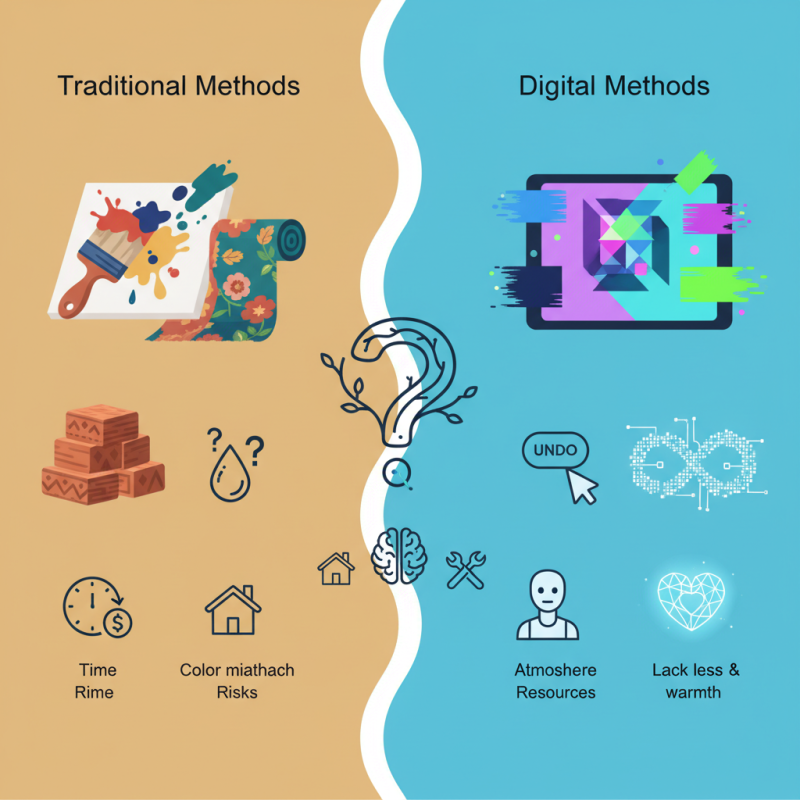
In the world of decoration, many wonder: what is the difference between traditional and digital decoration methods? Traditional methods often rely on physical materials. These include paint, fabric, and wood. They evoke a sense of craftsmanship. Digital methods use technology. They allow for quick edits and endless design possibilities.
Yet, each approach has its drawbacks. Traditional techniques can be time-consuming and expensive. The risks of splatter or color mismatches might result in frustration. Digital methods, while versatile, can lead to an impersonal feel. A digital design may lack the warmth of hand-painted details.
Choosing between these methods requires careful thought. Consider the space and the desired atmosphere. Reflect on your skills and resources. Both approaches offer unique benefits and challenges. Exploring these aspects can lead to a more informed decision.
Understanding Traditional Decoration Methods and Their Benefits
When considering traditional decoration methods, it’s important to understand their enduring appeal and benefits. Traditional techniques often incorporate natural materials, giving spaces a warm and inviting feel. Studies show that 70% of homeowners still prefer natural textures and colors. Techniques like hand-painting or woodworking showcase artisanal craftsmanship. This method emphasizes a unique touch, making every piece distinct.
Traditional decoration is also associated with historical significance. For instance, incorporating vintage styles brings character and depth to a space. According to a recent survey, 65% of people believe that traditional designs reflect timeless beauty. Materials such as wood and fabric are not only aesthetically pleasing but also sustainable. While the durability of traditional methods is evident, they can require more maintenance compared to digital alternatives. It's essential to weigh both the charm and practicality of these methods.
However, embracing traditional decor doesn’t come without drawbacks. Achieving the perfect vintage look can be a challenge. The time-intensive nature of sourcing and restoring can test patience. Furthermore, costs may rise due to craftsmanship demand. Bright colors might fade over time, necessitating upkeep. Each of these factors invites reflection on the true value of traditional methods in modern design.
Exploring Digital Decoration Techniques and Their Advantages
Digital decoration methods are gaining traction in various industries. According to a recent report by the International Decor Trends, over 65% of interior designers are exploring digital techniques for their projects. These methods provide flexibility and creativity that traditional methods often lack. The ability to visualize ideas in real-time can significantly enhance client satisfaction.
Tips: Consider virtual reality (VR) tools to create immersive environments for clients. VR allows them to experience designs before making decisions. Use software that provides 3D modeling for a more interactive approach to decoration. These tools help to identify potential issues early on.
Another advantage of digital decoration is the ease of collaboration. Designers can share ideas with clients instantly. This leads to faster revisions and approvals. However, it's important to remember that technology has its limitations. Digital tools may not capture the tactile qualities of materials accurately. Embracing both traditional and digital methods can sometimes yield the best results.
Tips: Always seek feedback from clients during the digital design process. Their insights can reveal what resonates with them. Also, stay updated with the latest digital tools in the market to enhance your skills and offerings.
Comparing Cost-Effectiveness of Traditional vs. Digital Decorations
When comparing traditional and digital decoration methods, cost-effectiveness plays a crucial role. A recent industry report revealed that digital decorations can reduce costs by up to 30% compared to their traditional counterparts. Digital methods often require less material waste and can be adjusted quickly to meet specific needs. This can lead to overall savings, especially for larger projects or events.
However, traditional decorations often provide a tactile quality that digital methods might lack. For instance, events focusing on a vintage or rustic theme might prioritize physical textures and handmade artistry over digital displays. While the initial investment may be higher, the emotional impact of traditional decor can resonate deeply with audiences. A survey indicated that over 70% of people remember an event because of its unique traditional decorations.
Despite the cost benefits of digital options, they also require an understanding of technology. Some professionals may struggle with software or digital design tools. This can create potential delays and unexpected costs. The choice between traditional and digital methods ultimately depends on the project's vision, budget, and audience expectations. Each approach has its unique advantages and challenges, which should be carefully considered.
Assessing the Environmental Impact of Decoration Methods
When considering decoration methods, the environmental impact is crucial. Traditional methods often involve materials like wood, paint, and textiles that may harm the environment. These materials contribute to deforestation, waste, and pollution. In contrast, digital decoration, typically using screens and software, can have a lower carbon footprint if managed correctly.
Tips: Always research the origin of materials used in traditional decoration. Sustainable sources are key. Look for eco-friendly paints with no harmful VOCs.
Digital decorations can reduce waste by eliminating physical materials. However, it’s important to consider the energy consumption of electronic devices. Balance energy use and visual appeal to make informed choices.
Tips: Choose energy-efficient devices for digital displays. Consider turning off screens when not in use to minimize energy usage. Reflect on how you can combine both methods effectively for a reduced environmental footprint.
Deciding Factors: Personal Style, Purpose, and Practicality in Choices
Choosing between traditional and digital decoration methods involves various factors. Personal style plays a crucial role. Some people feel a deep connection to handcrafted items, which can bring warmth and character to a space. Others may prefer sleek, modern designs. Digital methods can yield high-quality visuals and innovative ideas. Think about the vibe you want to create.
Purpose is another deciding factor. Are you decorating for a special occasion or a long-term space? Traditional methods offer timeless charm, suited for events like weddings. Digital options are great for temporary displays or modern settings. Practicality cannot be ignored. Consider budget and maintenance. Traditional items might require more care, while digital solutions can be cost-effective and easy to update.
Reflecting on these choices is important. Do you lean towards comfort or innovation? Assess how each method aligns with your lifestyle. Will a mix of both serve your vision? Finding the right balance is part of the creative process. Embrace the flaws and uncertainties, as they may lead to unique discoveries in your decorative journey.
FAQS
: Traditional decoration methods use natural materials and handcrafted techniques to create inviting spaces.
Many homeowners appreciate natural textures and colors, valuing their warmth and unique charm.
They emphasize artisanal craftsmanship, historical significance, and sustainability in decorating.
Yes, they often require more maintenance and upkeep compared to digital alternatives.
Sourcing and restoring vintage styles can be time-consuming and costly, testing one's patience.
Personal style shapes emotional connections, while purpose determines the suitability of decor for events or long-term use.
Assess your budget and maintenance needs, as traditional items may require more care.
Yes, blending both can create a unique aesthetic that aligns with your vision and lifestyle.
Many believe traditional designs bring character, enhancing the charm of a space with historical elements.
Reflecting on your preferences helps find the right balance, leading to a more thoughtful and satisfying outcome.
Conclusion
The article "2026 How to Choose Between Traditional and Digital Decoration Methods?" provides an in-depth analysis of the key differences between traditional and digital decoration techniques. It begins by exploring traditional decoration methods, highlighting their benefits such as craftsmanship and timeless appeal. Following this, the article delves into digital decoration techniques, showcasing their modern advantages like versatility and efficiency.
A critical section compares the cost-effectiveness of each method, revealing how each has its place depending on the project. Additionally, the environmental impact of these decoration choices is assessed, emphasizing sustainability concerns. Ultimately, the article outlines crucial deciding factors such as personal style, purpose, and practicality, aiding readers in understanding what is the difference between traditional and digital decoration methods effectively. By considering these elements, individuals can make informed decisions that reflect their preferences and needs.

 Magly Printer